Expert GRC Services for Today’s Complex Risk Landscape
Governance, Risk and Compliance (GRC) is not about just checking boxes, it’s about building a culture of accountability and resilience.
While frameworks outline the “WHAT” of compliance, a mature GRC program defines and implements the “HOW”, integrating People, Process, Leadership and Technology to protect the organization from evolving risks.
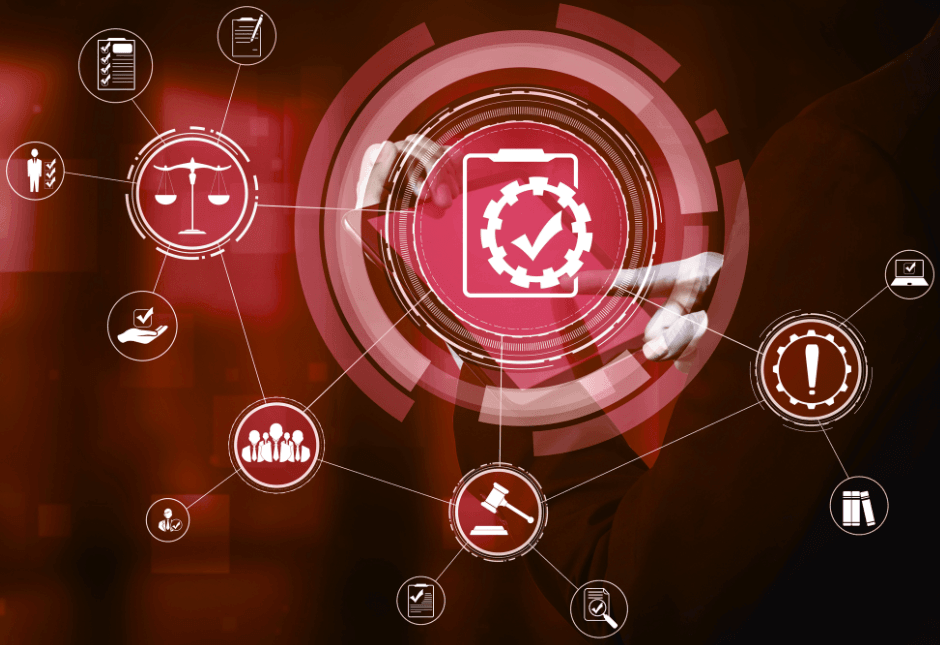
A GRC program brings together three areas that are often treated separately: governance, risk management, and compliance. When integrated correctly, these elements create a strong, repeatable process that supports your long-term security goals.
——————————
Governance defines how cybersecurity is managed from who is responsible for what, to how decisions are made and communicated. This creates accountability and reduces internal confusion.
Risk Management identifies your biggest threats and builds practical responses. A GRC approach helps you prioritize the areas that pose the most risk to your data, contracts, and operations. ( Goliath Cyber Risk Management Program )
Compliance ensures your business meets the required standards, whether it’s CMMC
, GLBA, NIST 800-171
, NIST AI RMF,
ISO 27001, HIPPA,
or SOC 2
. But more importantly, it helps you stay compliant without burning out your team or disrupting your operations.
——————————
When all three elements work together, your organization moves from reactive firefighting to proactive security maturity.
We support major industry-standard governance, risk, and compliance frameworks including but not limited to…
GLBA compliance is a U.S. federal law requirement forcing financial businesses to protect private customer data, give clear privacy notices, and stop data theft.
It is built on three core rules: the Financial Privacy Rules, the FTC Safeguards Rules, and Pretexting Provisions.
NIST compliance is the process of following cybersecurity rules and best practices set by the National Institute of Standards and Technology (NIST) to secure sensitive data and manage risks.
It is required for U.S. government agencies and their contractors, and used as a helpful guide by private companies.
ISO 27001 is the internationally recognized standard for establishing, implementing, and maintaining an Information Security Management System (ISMS).
It helps organizations protect the confidentiality, integrity, and availability of sensitive information through a structured and auditable approach to cybersecurity and risk management.
HIPAA compliance is the process of meeting federal standards set by the Health Insurance Portability and Accountability Act of 1996 to protect patient privacy, secure health records, and handle medical data safely.
It applies to any group that handles protected health information (PHI), including doctors, hospitals, insurance plans, and tech vendors.
NIST AI RMF compliance is the adoption of the National Institute of Standards and Technology AI Risk Management Framework to responsibly design, develop, deploy, and govern artificial intelligence systems.
It centers on four core functions: Govern, Map, Measure, and Manage.
PCI DSS compliance means meeting a set of security rules, specifically the Payment Card Industry Data Security Standard created by major credit card companies to safely handle, store, and process customer credit and debit card information.
It is designed to prevent data theft and reduce fraud.
NYDFS compliance is a set of strict cybersecurity rules known as 23 NYCRR Part 500 , created by the New York State Department of Financial Services.
It requires banks, insurance companies, and other financial groups to protect private data, use multi-factor authentication, and report major cyber attacks quickly.
CMMC compliance is a mandatory cybersecurity verification framework for Department of Defense (DoD) contractors designed to protect sensitive government data across the defense supply chain.
It ensures that contractors properly safeguard two types of unclassified data: Federal Contract Information (FCI) and Controlled Unclassified Information (CUI).
SOC 2 compliance is a data security framework that evaluates how well a service provider protects customer data.
It relies on five Trust Services Criteria (security, availability, processing integrity, confidentiality, and privacy) and is verified through an independent audit by a licensed CPA
GDPR compliance means an organization follows the rules of the European Union’s General Data Protection Regulation to safely collect, use, and protect personal data.
It gives people control over their personal information and requires companies to be clear and honest about how they use data.
Our Program
Risk Identification & Assessment
Risk assessments identify vulnerabilities and help prioritize actions to reduce threats before they impact your organization.
With Goliath Cyber, receive thorough, scheduled risk reviews, actionable reports, and clear recommendations aligned with the latest standards.
Ongoing assessments ensure your risk management strategy evolves with your business and the changing regulatory landscape.
Policy Development & Implementation
Effective policy and procedure development is essential for meeting compliance requirements and strengthening your organization’s security posture.
You receive guidance and editable templates, ensuring your policies are both comprehensive and current and meet regulations requirements.
Goliath Cyber helps tailor these documents to your business, making sure they address real-world risks and stand up to audit scrutiny.
Vendor & Third-Party Risk Management
Vendors with weak security practices can expose your business to significant risks and consequences. If a supplier fails to meet compliance obligations, you may still be held responsible.
We evaluate your vendors through targeted questionnaires and document reviews. Our process examines security practices, contractual terms, and compliance commitments.
This gives you a clear view of each vendor’s risk profile.
Audit Readiness, Reporting & Suppport
Goliath Cyber simplifies audit preparation by centralizing documentation, tracking policy updates, and enabling easy access for auditors and stakeholders.
Receive hands-on support gathering evidence, managing responses, and ensuring timely submissions.
This approach shortens audit cycles, boosts confidence, and helps maintain a clean compliance record year after year.
Business Continuity & Disaster Recovery
Business continuity and disaster recovery ensures critical services remain available, recovery is swift and data loss is minimized.
Goliath Cyber provides the frameworks and governance needed to sustain central operations and restore stability quickly after disruptions.
Through structured planning, risk assessments and simulation-driven preparedness, we help organizations strengthen continuity, meet regulatory expectations and maintain stakeholder trust.
Continuous Complaince Monitoring
Stay on top of changing regulations with ongoing risk assessments and compliance reviews.
Goliath Cyber’s experts conduct regular risk analyses, identify vulnerabilities, and recommend actionable steps to ensure your business remains compliant and protected.
This proactive approach prevents costly incidents and maintains your reputation, without straining internal resources.
Frequently Asked Questions
GRC (Governance, Risk, and Compliance) services help organizations align IT and security practices with business objectives, manage risks, and meet regulatory requirements.
GRC ensures you can identify risks early, avoid regulatory penalties, improve security posture, and build trust with customers and stakeholders.
Any business that must follow compliance regulations can benefit from GRC services, regardless of size.
GRC helps them set clear policies, manage third-party risks, and stay compliant with laws such as privacy or financial regulations. It also supports better decision-making by organizing how risks are tracked and addressed.
This prevents fines, protects reputation, and builds trust with customers and partners.
Signs your business may need better compliance or risk management include:
- Repeated audit issues or unresolved findings
- Unclear or outdated internal policies
- Staff confusion about compliance steps
- Missed deadlines for required filings
- Frequent mistakes in how data is handled
- Limited insight into vendor or internal risks
These gaps increase your potential risks of penalties, lawsuits, or business disruptions.
We support frameworks such as GLBA (FTC Safeguards), ISO 27001, SOC 2, PCI DSS, HIPAA, GDPR, NIST, and other industry-specific regulations.
Typical services include risk assessments, policy development, compliance gap analysis, audit support, control implementation, and continuous monitoring.
Yes, we provide end-to-end support including gap assessment, documentation, implementation, and audit readiness.
Goliath Cyber works with organizations across finance, education, healthcare, e-commerce, SaaS, blockchain, government contracting, and critical infrastructure sectors.
Whether you are a fast-growing startup or a regulated enterprise, our services are scoped to your industry requirements and risk profile.
Yes, we create and customize policies, procedures, and standards aligned with your business and regulatory requirements.
GRC works alongside security operations by defining policies, managing risks, and ensuring controls are implemented and monitored effectively.
Build a Mature GRC Program with a Trusted Partner
Strengthen your security program with a partner who understands your compliance landscape.
STRONGER TOGETHER. PROTECTING WHAT MATTERS MOST.